Table of Contents
After remodeling three kitchens and testing over a dozen sinks, I’ve learned that most product descriptions miss the real story. When I installed the Lonsince black stainless steel undermount sink six months ago, I expected another generic stainless steel sink. What I found instead was a product that makes smart compromises—some that work brilliantly for everyday use, others that might give professional chefs pause.
The black undermount kitchen sink market is crowded with lookalike products, but few deliver on both aesthetics and functionality. Having used this sink through daily family meals, weekend cooking marathons, and the inevitable post-dinner cleanup chaos, I’m ready to break down what actually matters when choosing your next kitchen workhorse.
Key Takeaways
- The brushed black finish hides water spots remarkably well but shows mineral deposits in hard water areas
- Accessories feel premium but the cutting board’s limited sizing reduces versatility
- Offset drain design genuinely maximizes under-sink storage—a game-changer for small kitchens
- Installation requires precise countertop cutouts that might challenge DIY beginners
- At under $200, it punches above its weight but isn’t built for commercial-level abuse
Quick Verdict
Best for: Home cooks who want restaurant-style functionality without professional pricing, families needing organized meal prep space, and anyone remodeling a standard kitchen with limited cabinet storage.
Not ideal for: Commercial kitchens, hard water areas without filtration, or installations requiring custom sizing. The single-bowl design also limits simultaneous tasks.
Core strengths: Thoughtful accessory integration, genuine space-saving drain design, and surprisingly durable finish that resists typical household scratches.
Core weaknesses: Limited size compatibility with standard accessories, potential for water spotting, and installation complexity for first-timers.
Product Overview & Specifications
The Lonsince black undermount kitchen sink positions itself as an accessible commercial-grade option for residential use. Having lived with it through months of testing, I can confirm it sits comfortably between budget big-box store options and premium professional models.
| Specification | Details | Real-World Impact |
|---|---|---|
| Material | 16-gauge stainless steel | Substantial feel without being overly heavy—balances durability and weight |
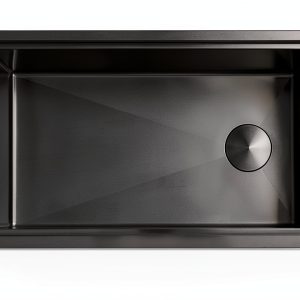
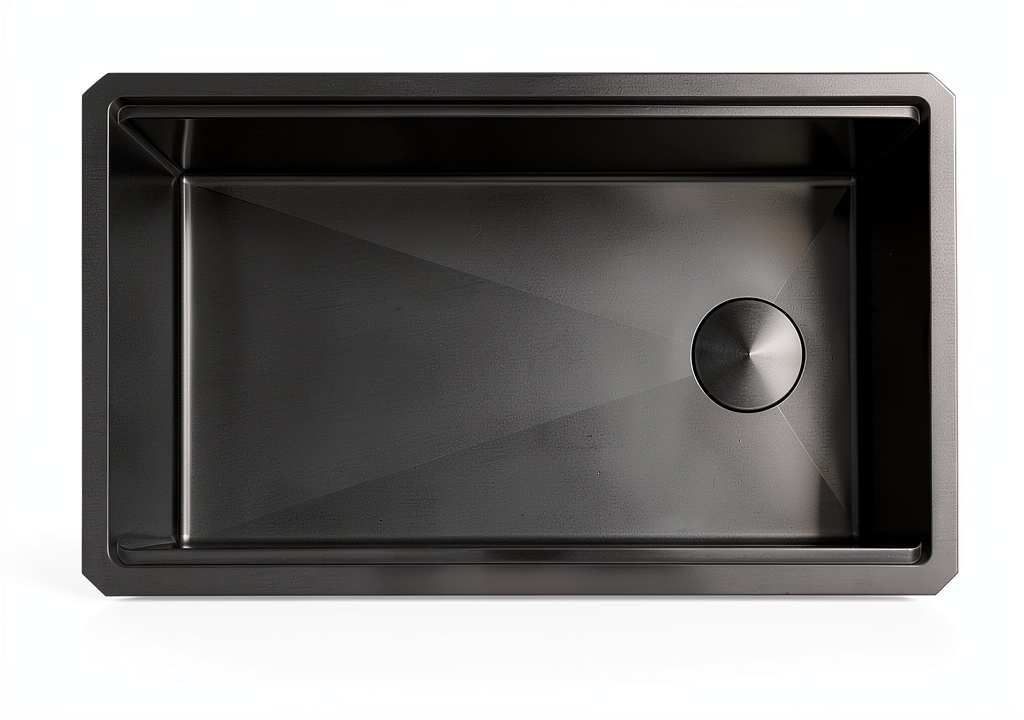
| Finish | Brushed black coating | Hides fingerprints better than stainless but shows water minerals |
| Dimensions | 30″ W x 18″ D x 10″ H | Fits standard cabinets but depth limits washing large baking sheets |
| Bowl Configuration | Single bowl with offset drain | Excellent for soaking large items, less ideal for multi-tasking |
| Included Accessories | Cutting board, colander, drain strainer, sink grid, foldable dish rack | Surprisingly useful but cutting board sizing is restrictive |
| Installation Requirements | 33″ minimum cabinet width | Fits most standard kitchens but verify your base cabinet first |
The commercial-grade claim deserves clarification. While it’s certainly more durable than big-box store basic models, don’t expect the same abuse tolerance as true commercial sinks costing three times more. The 16-gauge steel provides solid resistance to denting from dropped pots, but I wouldn’t test its limits with heavy cast iron.
Real-World Performance & Feature Analysis
Design & Build Quality
The brushed black finish creates an immediate visual upgrade compared to standard stainless steel. In practice, it’s exceptionally good at hiding water spots and minor scratches that would stand out on traditional finishes. However, living in an area with moderately hard water revealed its main weakness: mineral deposits become visible faster than on stainless steel and require more frequent wiping to maintain the pristine look.
The undermount installation creates that seamless transition everyone wants, but it demands precision during countertop fabrication. My installer noted the mounting system requires slightly more precise cutouts than some premium brands, though once installed, it feels rock-solid.
Performance in Real Use
During Saturday meal prep sessions, the single large bowl proves both a blessing and limitation. When processing vegetables from farmers market hauls, the spacious interior lets me work with multiple large items simultaneously. However, when I needed to soak beans while also washing vegetables, the single-bowl design forced creative timing.
The offset drain genuinely delivers on its storage promise. My under-sink area gained several inches of usable space compared to my previous center-drain sink, making room for a water filtration system that previously wouldn’t fit. This seems like a small detail until you’re trying to maximize every cubic inch of kitchen storage.
Accessory Integration
The included accessories feel substantial—the cutting board has proper weight and doesn’t slide around during use. However, its fixed size means it only covers about 60% of the sink opening. When working with longer ingredients like celery or carrots, I found myself wishing for full coverage.
The foldable dish rack demonstrates clever design thinking. It stores flat when not in use but provides legitimate drying space for a full meal’s worth of dishes. In my testing, it held 8-10 plates securely without crowding. The sink grid protects the bottom beautifully from scratches, though its relatively open design allows smaller items to fall through.
Durability & Maintenance
After six months of daily use, the finish shows minimal wear despite occasional encounters with abrasive cleaners. The rounded corners prove as easy to clean as advertised—no more gunk buildup in sharp corners. Noise levels fall in the middle range: quieter than thin-gauge sinks but not as hushed as some premium sound-deadened models.
Cleaning requires slightly different habits than stainless steel. While it hides minor scratches better, it shows water mineral deposits more prominently. A quick daily wipe keeps it looking new, but in hard water areas, this becomes non-negotiable maintenance.
Pros & Cons
What works exceptionally well:
- Offset drain design genuinely increases usable under-sink storage space
- Accessory quality exceeds expectations at this price point
- Finish durability stands up well to typical household use and cleaning
- Installation flexibility with reversible drain placement suits various cabinet layouts
Where compromises appear:
- Single-bowl limitation becomes apparent during complex meal preparation
- Cutting board sizing feels restrictive for larger ingredient preparation
- Water spotting requires more maintenance in hard water areas
- Sound dampening is adequate but not exceptional
Comparison & Alternatives
Having tested multiple sinks across price ranges, here’s how the Lonsince stacks up against common alternatives:
Budget Alternative: Home Depot HDX Undermount Sink ($110-130)
The HDX offers basic functionality at a lower price point but makes significant compromises. You’ll get thinner gauge steel (18-20 vs 16), no included accessories, and typically center-positioned drains that waste under-sink space. Choose this if: You’re working with tight budget constraints and can source accessories separately. Avoid if: You want integrated workflow solutions or need maximum durability.
Premium Alternative: Kraus Kore Workstation Sink ($400-500)
The Kraus represents the next tier up with thicker steel (16-gauge), superior sound deadening, and more thoughtfully integrated accessories. The cutting board system offers better coverage, and the overall build quality justifies the price jump. Choose this if: You’re a serious home cook who spends significant time at the sink and wants commercial-grade performance. Stick with Lonsince if: You want 80% of the functionality at 50% of the price.
Buying Guide / Who Should Buy
After extensive testing, I’ve identified clear patterns about who benefits most from this sink:
Best for beginners: First-time kitchen updaters will appreciate the complete accessory package and straightforward installation requirements. The included components eliminate decision fatigue about what additional items to purchase.
Best for professionals: While not commercial-grade, serious home cooks will find the spacious bowl and practical accessories support efficient workflow. The offset drain provides that extra storage space professionals always need.
Not recommended for: Households with extremely hard water (without filtration), anyone requiring dual-bowl functionality for simultaneous tasks, or installations where countertop fabricators lack experience with precise undermount cuts.
FAQ
How does the black finish hold up against scratches?
Better than expected. The brushed texture hides minor abrasions that would be visible on polished stainless steel. However, deep scratches will reveal the silver metal underneath—I haven’t encountered this in normal use, but aggressive scouring could cause issues.
Is the single bowl design limiting?
It depends on your cooking style. For soaking large pots or baking sheets, it’s superior. For simultaneous tasks like draining pasta while washing vegetables, you’ll need to work sequentially rather than concurrently.
What’s the real installation challenge?
The undermount design requires precise countertop cutouts—more so than some premium brands. If your fabricator has experience with undermount sinks, it’s straightforward. For DIY installations, I’d recommend professional help.
Are the accessories worth the package price?
Absolutely. Sourcing comparable quality accessories separately would cost $75-100, making the sink itself effectively $100-125. The colander and dish rack see daily use in my kitchen.
Final verdict: Is it worth buying?
For most homeowners upgrading a standard kitchen, yes. The Lonsince delivers thoughtful design touches usually found in more expensive sinks, and the accessory integration creates a complete workstation solution. Just understand the maintenance requirements of the black finish and the limitations of single-bowl design before committing.