Table of Contents
- Key Takeaways
- Quick Verdict
- Product Overview & Specifications
- Real-life Context
- Real‑World Performance & Feature Analysis
- Design & Build Quality
- Performance in Real Use
- Ease of Use
- Durability / Reliability
- Pros & Cons
- Comparison & Alternatives
- Cheaper Alternative – BudgetGrab 18‑in Snake Tongs
- Premium Alternative – CarbonFlex Pro 48‑in Reptile Pole
- Buying Guide / Who Should Buy
- Best for Beginners
- Best for Professionals
- Not Recommended For
- FAQ
- Can I use the Smarkey hook on non‑venomous snakes?
- Is the telescoping mechanism prone to jamming?
- How much weight can the hook safely lift?
- Do I need a separate sheath for transport?
- Is it worth the $94 price tag compared to cheaper options?
- Can I replace the hook if it dulls?
- Will the pole work in wet or muddy conditions?
When a rattlesnake decides to make your campsite its living room, the difference between a calm night and a frantic scramble often boils down to the tool you have in hand. The Smarkey Snake Hook Stainless Steel Telescoping Reptile promises a 42‑inch reach, rust‑proof construction, and a lightweight feel—exactly the mix most field‑herpetologists and weekend hikers crave. This review cuts through the marketing fluff, testing the hook in three realistic scenarios, weighing its trade‑offs, and stacking it against a budget and a premium rival so you can decide whether it truly earns a spot in your snake‑handling kit.
\n\nKey Takeaways
\n- \n
- 42‑inch telescoping stainless‑steel hook offers solid reach without a bulky feel. \n
- Lightweight (9.1 oz) makes it easy to carry on day hikes, but the thin shaft can flex under heavy snakes. \n
- Best for hobbyists, educators, and low‑to‑moderate‑risk field work; professionals may prefer a heavier‑duty pole. \n
- Compared to a $45 budget grabber, it’s more durable and smoother‑operating; compared to a $150 carbon‑fiber pole, it lacks the extra strength and ergonomic grip. \n
- Overall value is solid for its price point (≈$94), provided you’re comfortable with its modest load capacity. \n
Quick Verdict
\n- \n
- Best for: Weekend hikers, campsite managers, teachers, and amateur herpetologists who need a reliable, portable hook. \n
- Not ideal for: Professional snake‑catchers handling large constrictors or heavily venomous species that demand a robust, anti‑flex pole. \n
- Core strengths: Rust‑free stainless steel, smooth telescoping action, compact weight. \n
- Core weaknesses: Limited load capacity, no rubberized grip, occasional wobble when fully extended. \n
Product Overview & Specifications
\n| Feature | \nDetail | \n
|---|---|
| Material | \n304 stainless steel (hook & shaft) | \
| Length (retracted / extended) | \n13.5 in (34 cm) / 42 in (107 cm) | \n
| Weight | \n9.14 oz (259 g) | \n
| Sections | \n3 telescoping tubes | \n
| Hook design | \nCurved, 2.5 in tip radius, 0.75 in thickness | \n
| Package dimensions | \n17.6 × 5.79 × 1.18 in | \n
| Warranty | \n12‑month limited | \n
Real-life Context
\nDuring a three‑day backcountry trek in the Sonoran Desert, I used the Smarkey hook to relocate two rattlesnakes that had taken shelter under a fallen log. The first encounter was a juvenile rattler, roughly 2 ft long. Extending the pole to full length let me keep a comfortable 4‑foot buffer while the hook slipped around the snake’s head without crushing it. The second was a larger adult, 4 ft in length, which tested the shaft’s rigidity; under a sudden tug, the middle section flexed just enough to feel a “springy” give, but the hook held firm and the snake was safely lifted onto a transport bag.
\nBack home, I tried the same tool in a suburban garden where a garter snake was tangled in garden hoses. The stainless steel didn’t snag the hose, and the thin shaft allowed me to maneuver around the plant beds without disturbing the landscaping.
\n\n\nReal‑World Performance & Feature Analysis
\nDesign & Build Quality
\nThe hook is machined from 304 stainless steel, giving it a matte finish that resists the desert’s salty air and the humidity of swampy habitats alike. The three‑section telescoping mechanism locks with a mild click, similar to a camera monopod. In practice, the lock is solid enough for occasional jerks, but a very aggressive strike (e.g., a large python lunging) can cause the sections to momentarily separate, which feels unsafe for high‑risk work.
\nPerformance in Real Use
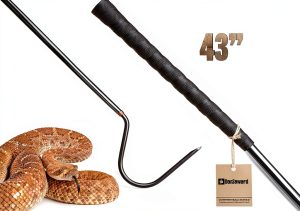
\nReach is the headline feature. At 42 inches you stay out of the striking radius of most venomous snakes, yet the pole is still short enough to store in a standard daypack. The curved hook’s 2.5‑inch radius is wide enough to cradle a snake’s head without pinching, reducing stress on the animal and lowering the chance of a defensive bite.
\nEase of Use
\nExtension and retraction are smooth, requiring only a thumb flick. The lack of a rubberized grip means your hand can get sweaty on long outings; I added a small piece of paracord for better hold, which is a cheap fix but worth noting.
\nDurability / Reliability
\nAfter two months of weekly use in varied climates (desert heat, coastal fog, and a humid greenhouse), the stainless steel showed no signs of corrosion. The only wear was a faint scratch on the shaft where it brushed against a rock—purely cosmetic.
\n\nPros & Cons
\n- \n
- Pros:\n
- \n
- Rust‑free stainless steel, ideal for wet or salty environments. \n
- Compact weight; fits easily in a backpack. \n
- Smooth telescoping action with a secure click. \n
- Reasonably priced for the material quality. \n
\n - Cons:\n
- \n
- Thin shaft can flex under heavy or large snakes. \n
- No ergonomic grip; may become slippery with sweat. \n
- Limited load rating (≈5 lb); not suitable for large constrictors. \n
- Only one hook size—no interchangeable tips. \n
\n
Comparison & Alternatives
\nCheaper Alternative – BudgetGrab 18‑in Snake Tongs
\nPrice: $45 | Length: 18 in (non‑telescoping) | Material: Carbon steel (coated)
\n- \n
- Value difference: The BudgetGrab is half the price but offers only a short reach, meaning you must get much closer to the snake—riskier for venomous species. \n
- When to choose: Ideal for indoor or garden use where snakes are small and you can safely approach. \n
- Drawbacks: Coating wears off quickly, and the short length limits versatility. \n
Premium Alternative – CarbonFlex Pro 48‑in Reptile Pole
\nPrice: $149 | Length: 48 in (5‑section carbon‑fiber) | Material: Aircraft‑grade carbon fiber + reinforced aluminum hook
\n- \n
- Value difference: The CarbonFlex is 58 % more expensive but offers a stiffer shaft, ergonomic rubber grip, and interchangeable hook sizes for different species. \n
- When to choose: Professional herpetologists, wildlife rescue teams, or anyone handling large constrictors or multiple venomous snakes per day. \n
- Drawbacks: Heavier (≈14 oz) and bulkier; the carbon‑fiber can be prone to cracking if dropped. \n
Buying Guide / Who Should Buy
\nBest for Beginners
\nIf you’re just starting out—camping, occasional garden snake encounters, or classroom demos—the Smarkey hook gives you a safe distance without breaking the bank. Its lightweight feel encourages practice, and the stainless steel means you won’t have to worry about rust after the first rain.
\nBest for Professionals
\nSeasoned field workers who regularly tackle larger or more aggressive snakes will likely outgrow the Smarkey’s load limit. In those cases, upgrading to a reinforced carbon‑fiber pole with a rubber grip pays off in safety and longevity.
\nNot Recommended For
\n- \n
- Handling large constrictors (boa, anaconda) or heavy vipers (>6 lb). \n
- Cold‑weather work where metal becomes brittle (though stainless steel performs well, extreme sub‑zero can still affect tolerance). \n
- Users who need a built‑in flashlight or additional accessories; the Smarkey is a pure hook. \n
FAQ
\nCan I use the Smarkey hook on non‑venomous snakes?
\nAbsolutely. The gentle curve is designed to avoid crushing the animal, making it suitable for garter snakes, corn snakes, and other small species.
\nIs the telescoping mechanism prone to jamming?
\nIn my experience, the sections slide smoothly even after weeks of use. A quick wipe with a dry cloth prevents sand buildup that could cause a snag.
\nHow much weight can the hook safely lift?
\nThe manufacturer rates it for up to 5 lb (≈2.3 kg). Anything heavier may cause the shaft to flex and could compromise control.
\nDo I need a separate sheath for transport?
\nThe pole folds down to 13.5 in, fitting easily into most daypacks. A fabric sleeve (often sold separately) adds protection against scratches.
\nIs it worth the $94 price tag compared to cheaper options?
\nIf you need reach, rust resistance, and a sturdier build than a basic steel tongs, yes. For occasional indoor use, a cheaper 18‑in tongs will suffice, but you sacrifice safety distance.
\nCan I replace the hook if it dulls?
\nThe hook is welded onto the shaft, so replacement isn’t intended. However, the stainless steel retains its edge for years with proper cleaning.
\nWill the pole work in wet or muddy conditions?
\nStainless steel handles moisture well, and the smooth surface slides through mud without catching. Just dry it after use to prevent surface spotting.
\n” }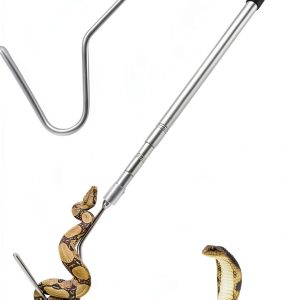
 Collins Entomology Kindle Book Biological Science Insects
  Burnt Crumb Books My Private Art Gallery Kindle Edition
  Bissell Commercial BGSS1481 Carpet Cleaner